
Modern automotive engineering has reached an incredible pinnacle. Off the factory floor, today’s vehicles are equipped with unparalleled processing power, intricate direct-injection setups, and sophisticated forced-induction systems. Yet, for all their technical brilliance, factory cars and trucks rarely operate at their true potential. Automakers construct assembly-line vehicles with broad, generic safety margins designed to tolerate subpar maintenance, abysmal fuel quality, and highly restrictive emissions standards worldwide.
Because of these mass-market compromises, your vehicle is likely leaving significant horsepower, torque, and fuel efficiency locked away in its factory software code. Unlocking this hidden capacity requires rewriting the instructions governing your Engine Control Unit (ECU). When drivers look to bridge the gap between mass-market compromises and localized, high-performance optimization, opting for custom car tuning becomes the definitive path to achieving maximum vehicle capability.
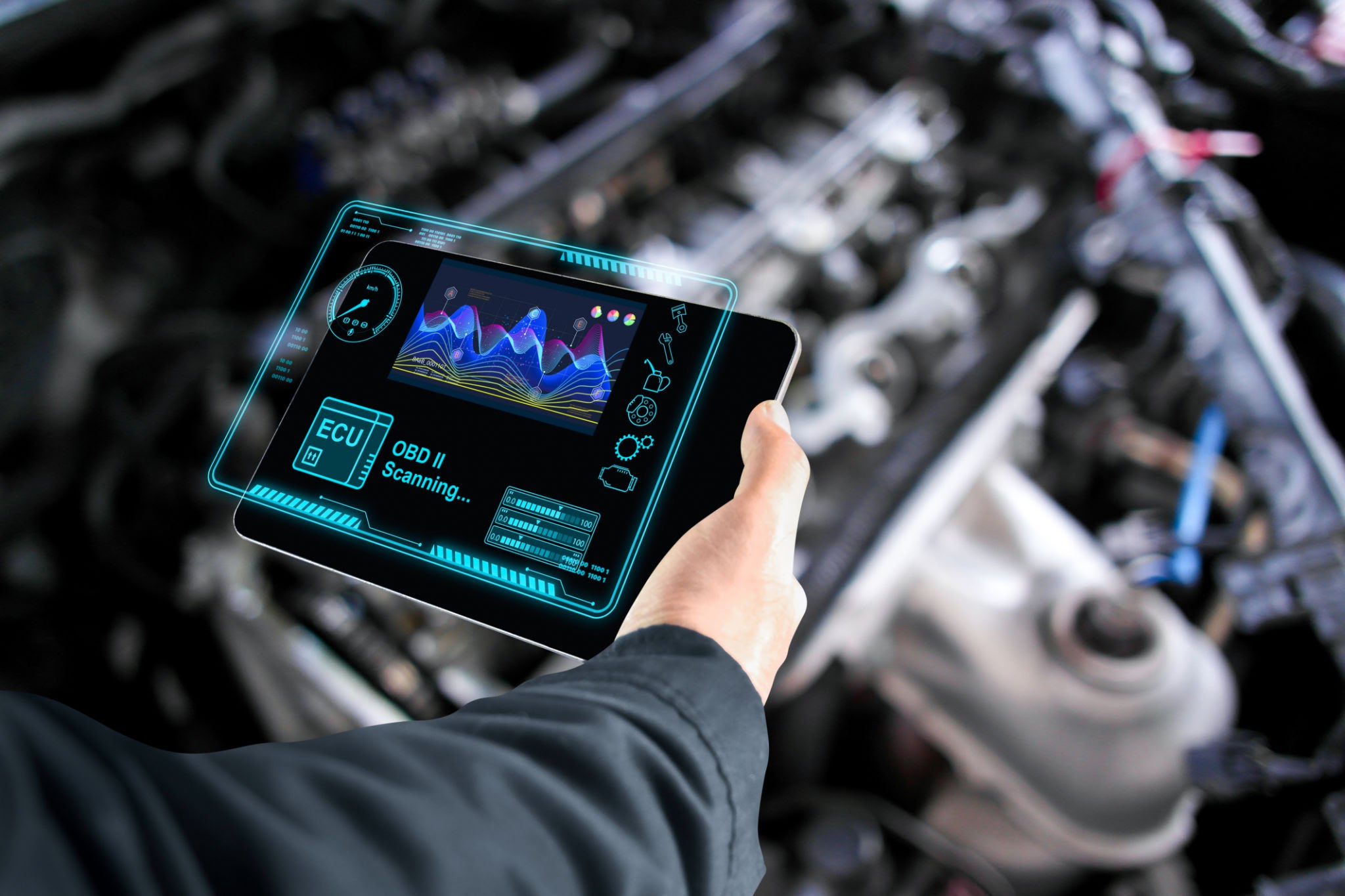
The Core Science Behind Engine Optimization
To appreciate why calibration rewrites yield such massive performance gains, it helps to understand what the computer actually controls. Every combustion cycle relies on a delicate balance of air, fuel, and spark timing. The factory programming utilizes massive look-up tables—often called maps—to command specific physical outcomes based on sensor feedback.
Air-to-Fuel Ratio (AFR) Management
Internal combustion engines function optimally under specific chemical ratios. Stoichiometric balance (14.7 parts air to 1 part fuel for standard gasoline) is ideal for emissions control at idle, but peak performance under heavy load requires a richer mixture. Factory calibrations often feature overly conservative, rich fuel dumps to keep exhaust gas temperatures low under long-term stress. Specialized calibrators rewrite these parameters, optimizing the fuel delivery path to maximize power while safely protecting structural components.
Spark and Ignition Timing Advance
Ignition timing dictates the precise microsecond a spark plug ignites the air-fuel mixture relative to the piston’s position. Advancing the spark timing closer to Top Dead Center (TDC) extracts maximum thermodynamic force from the fuel. Automakers purposely delay this timing to ensure engines do not suffer from damaging detonation (engine knock) if a consumer accidentally puts low-octane fuel into a premium-grade machine. When you commit to running a high-quality fuel grade, custom maps safely advance this timing curve, yielding aggressive torque responses right off the line.
Boost Management in Forced Induction
Turbocharged and supercharged engines—such as Ford’s highly popular EcoBoost lines or modern high-output diesels—rely entirely on electronic wastegates and bypass valves to manage intake pressure. Factory software purposely limitations boost thresholds to hit arbitrary power ratings. Digitally revising these electronic boundaries allows wastegates to hold pressures steady across a much broader RPM band, turning a flat, boring power curve into an aggressive, thrilling linear surge.
Why Off-The-Shelf Flashes Fall Short
When entering the world of modification, many drivers initially default to generic “canned” tunes or basic plug-and-play modules. While these off-the-shelf devices do alter basic signals, they are blind to the nuances of your specific environment and build. They apply identical global changes to thousands of distinct vehicles, introducing several limitations:
- Climate and Altitude Disconnect: A vehicle driving in the high-altitude, thin air of Colorado requires entirely different barometric compensation mapping than the exact same model driving through the high-humidity, sea-level heat of Florida. Canned tunes lack localized nuance.
- Hardware Incompatibilities: If you have added an aftermarket cold air intake, a freer-flowing downpipe, an upgraded intercooler, or a custom exhaust manifold, a generic flash cannot read those specific volumetric efficiency shifts.
- Abrupt, Unrefined Drivability: Mass-market handheld tuners frequently overcompensate by simply spiking throttle sensitivity and cranking up line pressures aggressively. This creates an unrefined, jerky experience that wears down driveline elements over time.
True calibration is a tailored process. It accounts for your exact modification list, fuel availability, and day-to-day work tasks, creating seamless, safe, and reliable drivability.
Beefcake Racing
Transforming the Modern Transmission
Power figures make for excellent marketing copy, but how that power makes it to the pavement dictates your actual driving experience. Modern multi-speed automatic transmissions, like the robust 10-speed variants co-developed by Ford and GM, rely entirely on software instructions embedded within the Transmission Control Module (TCM).
Many owners of modern trucks complain about erratic factory shifting: skip-gear logic that leaves the engine bogging at 1,100 RPM, hunting between gears on slight highway inclines, or delayed downshifts when trying to pass traffic.
Expert calibration addresses these specific behavioral flaws:
Factory Logic: Early upshifts -> Low RPM bogging -> Frequent gear hunting
Tuned Logic:   Linear retention -> Sustained power bands -> Crisp, predictable shifts
By revising shift schedules, electronic pressures, and torque converter lockup points, custom tuning maps transform the entire nature of the transmission. The vehicle holds gears perfectly through corners, drops cleanly to the optimal gear when passing, and minimizes clutch slip during heavy utility workloads.
Tailoring Solutions to Your Specific Utility Profile
One size does not fit all in the automotive space. A truck owner lugging a 12,000-pound travel trailer over mountain passes requires a radically different logic profile than an enthusiast tracking a twin-turbo sports sedan on weekends. Tailoring your computer’s brain to match your operational demands allows you to select dedicated strategies for your routine.
| Calibration Strategy | Primary Focus Area | Ideal Use Case |
|---|---|---|
| Heavy Towing Specific | Controlled EGTs, enhanced engine braking, cooling optimization | Pulling heavy campers, equipment trailers, commercial utility |
| Daily Performance | Immediate throttle response, progressive power, optimal fuel mileage | Commuting, occasional spirited driving, overall balance |
| Maximum Unleaded/E85 | Maximum spark advance, aggressive boost curves, complete output extraction | Track days, drag strip performance, maximum drag metrics |
The Towing Specialist
For truck platforms, safety under load is paramount. A towing-specific map focuses heavily on managing Exhaust Gas Temperatures (EGTs) and modifying the radiator fan engagement cycles so cooling begins before the engine gets excessively hot under structural strain. It reconfigures shift points to prevent high-gear hunting, ensuring your engine remains dead-center in its optimal torque band while climbing steep grades.
The Daily Driver Balance
A balanced performance map breathes immediate responsiveness into everyday scenarios. It removes factory throttle lag, straightens out dead spots in the power delivery curve, and often provides subtle fuel economy improvements during steady highway cruising by running more efficient, advanced timing loops.
The Path to Precision Control
Modern computer calibration is an exact science that leverages advanced data-logging tools to refine vehicle behavior. The calibration lifecycle typically moves through specific strategic milestones to ensure maximum precision:
1
Initial Assessment & Hardware Baseline
Prerequisite Verification
1.Initial Assessment & Hardware Baseline:Prerequisite Verification.
Analyze the vehicle’s health status, regional fuel qualities, and exact physical aftermarket modifications to set safe programming boundaries.
2
Data-logging Parameters
Real-time Performance Capture
2.Data-logging Parameters:Real-time Performance Capture.
Connect specialized scanning equipment to track high-speed parameter feeds including ignition timing, air-fuel parameters, knock sensor activity, and boost pressure under actual load.
3
Software Customization
Mapping Rewrites
3.Software Customization:Mapping Rewrites.
Modify map rows within the factory software code to safely adjust target air-to-fuel targets, timing advances, and electronic throttle behaviors.
4
Verification Flash & Validation
Final Safety Review
4.Verification Flash & Validation:Final Safety Review.
Upload the newly engineered map parameters directly into the vehicle’s computer modules and execute careful verification drives to ensure total structural safety and smooth power transitions.
Long-Term Durability and Peace of Mind
A common misconception is that flashing an engine inherently sacrifices its mechanical lifespan. In reality, a precise, calculated software upgrade preserves component longevity. By addressing lean-stumble issues, reducing excessive gear hunting that overheats transmission fluid, and keeping cooling fans ahead of temperature curves, professional calibration often mitigates structural stress.
Unlocking your powertrain’s potential isn’t about pushing mechanical tolerances to the absolute edge; it’s about eliminating the generic mass-production boundaries that limit your car’s inherent design. When you tailor the digital mapping to your specific vehicle, climate, and lifestyle, you don’t just add numbers on a dyno graph—you completely redefine how your vehicle responds to your right foot.