
Cape Coral’s 400-plus miles of navigable canals make it a true paradise for boaters. However, owning waterfront property in Southwest Florida also comes with its own unique set of challenges. From fluctuating tides and seasonal rain events to the looming threat of storm surges during hurricane season, the interface where land meets water is constantly under stress.
For many years, traditional fixed wood docks were the default choice for homeowners. But today, a structural shift is happening. Waterfront property owners are increasingly looking for long-term durability and lower maintenance, leading them to search for qualified floating dock builders in Cape Coral.
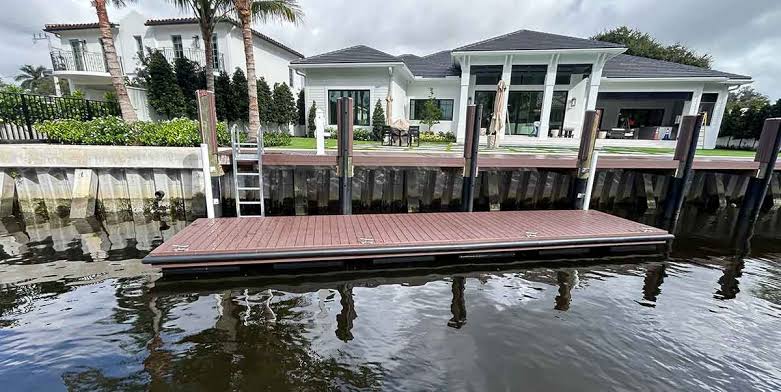
Why Floating Docks Work Well in Cape Coral
Unlike fixed docks that remain at a single height, floating docks adjust automatically to changing water levels. This dynamic design is a major advantage in Cape Coral, where canal depths can vary significantly.
The Dynamic Challenge of Tidal Fluctuations
In SW Florida, the difference between high and low tide can completely alter how you interact with your vessel. With a fixed dock, a boat can sit feet below the deck at low tide, making boarding difficult and potentially dangerous—especially for children, elderly guests, or when carrying heavy gear. Conversely, during high tides or heavy rainfall, the water can rise nearly level with a fixed dock, stressing the mooring lines.
Floating docks completely solve this problem. Because the entire platform rises and falls with the water column, the step-down distance from the dock to your boat’s gunwale remains completely constant.
Reduced Structural Stress
Fixed docks resist the relentless upward and downward movement of water. Over time, hydrostatic pressure and wave action loosen the fasteners, warp the framing, and pull pilings out of the canal bed.
Floating systems, on the other hand, move with the water instead of fighting it. By riding the waves and surges, they experience far less structural fatigue, preserving your shoreline and your investment for decades.
Common Reasons Homeowners Choose Floating Docks
- Fluctuating Water Levels: Ideal for shallow canals where low tides expose mudflats or deep canals subject to swift tidal currents.
- Hull Protection: Dramatically reduces the wear on boat hulls, rub rails, and cleats by eliminating the vertical shearing forces between a shifting boat and a static dock.
- Barefoot Comfort: Modern composite or polyethylene materials stay significantly cooler under the intense Florida sun than traditional pressure-treated wood.
- Lower Maintenance Costs: High-quality modular floats and structural frames require fraction of the maintenance, saving thousands in long-term staining and plank replacement.
Materials and Construction Quality: Wood vs. Composite vs. Polyethylene
The longevity of a floating dock depends almost entirely on the materials submechanisms beneath the surface. Cheap components degrade rapidly under constant saltwater exposure, UV radiation, and boring organisms (like marine shipworms).
Under the Deck: Flotation and Framing
A quality floating dock relies on heavy-duty, rotationally molded polyethylene dock floats filled with marine-grade expanded polystyrene (EPS) foam. This ensures that even if the outer shell is punctured by debris during a storm, the float will not lose buoyancy.
For the framing, marine-grade aluminum (specifically 6061-T6 alloy) is highly favored for its exceptional strength-to-weight ratio and corrosion resistance. It provides a rigid backbone that doesn’t rot like wood or rust like steel.
Comparing Decking Options
| Material | Lifespan | Maintenance Level | Heat Retention | Best For |
|---|---|---|---|---|
| Pressure-Treated Wood | 5 to 15 Years | High (requires regular sealing, staining, and sanding) | High (can splinter and get very hot) | Budget-conscious projects |
| Composite (Capped PVC) | 25+ Years | Low (occasional pressure washing) | Moderate (lighter colors stay comfortable) | Premium aesthetics & longevity |
| Polyethylene Modular | 20+ Years | Extremely Low (rinse with hose) | Low (engineered to dissipate heat) | Active boaters, kayaks, jet skis |
Planning for Storm Resilience: The Science of Anchoring
Hurricane season is an inevitable reality for Cape Coral homeowners. A common misconception is that floating docks are less stable in a storm. In reality, when engineered correctly, a floating dock can survive severe storm surges far better than a fixed counterpart.
During historic surges, fixed docks are often submerged. As the water rises over them, wave action exerts massive upward lifting forces, popping deck boards and snapping structural beams off their pilings.
[Fixed Dock during Storm Surge]
    🌊 Wave Action ──> [ Static Deck ] ──> (Upward Lift destroys joints)

[Floating Dock during Storm Surge]
    🌊 Wave Action ──> [ Floating Deck ] ──> (Rides up on Guide Pilings safely)
To achieve this resilience, builders use specialized anchoring systems:
- Guide Pilings & Pile Brackets: The dock is attached to heavy-duty wood, concrete, or fiberglass pilings via heavy metal rollers or brackets. As the surge rises, the dock simply climbs up the pilings.
- Telescoping Anchor Poles: For smaller canals where heavy pilings are not ideal, telescoping poles driven deep into the canal bed allow vertical movement while preventing lateral drift.
- Stiff-Arm Mooring Systems: These heavy-duty aluminum arms connect the dock directly to the seawall using pivoting hinges, maintaining a safe distance from the shore while allowing the dock to follow the water height.
Permitting and Local Regulations in Cape Coral
Building on Cape Coral waterways is not as simple as buying materials and starting construction. The city has incredibly strict zoning laws, setbacks, and environmental protections to preserve the canal ecosystem.
Key Permitting Considerations:
- The “25% Rule”: In Cape Coral, your dock and parked vessel generally cannot obstruct more than 25% of the width of the canal to ensure navigation remains clear for neighbors.
- Setback Requirements: Docks must be set back from property lines (typically 5 to 10 feet depending on the zone) to maintain privacy and access.
- Environmental Protections: Structures cannot damage local mangroves or critical habitats for manatees and smalltooth sawfish.
Navigating these guidelines requires deep local expertise. A specialized local marine contractor like Coastal Marine Group manages this daunting paperwork, coordinating directly with the City of Cape Coral, Lee County, and environmental protection agencies to secure approvals without costly delays.
What to Look for in a Cape Coral Dock Builder
Building on the water requires a specialized set of skills that general contractors simply do not possess. When evaluating builders, look for:
- Comprehensive Licensing and Insurance: Ensure they carry standard liability as well as USL&H (United States Longshore and Harbor Workers’ Compensation) insurance, which is legally required for marine construction.
- End-to-End Project Management: Choose a builder that handles the design, engineering, permit filing, and construction under one roof.
- Holistic Marine Construction Knowledge: A floating dock rarely exists in isolation. Builders who also understand seawall repair, boat lifts, and dredging can design a cohesive waterfront system where all components work together seamlessly.
A Note on Integrity: Be wary of bids that seem unusually low. Quality marine hardware, thick-walled aluminum frames, and properly engineered flotation units have real material costs. Saving a few dollars upfront on a cheap dock often leads to warped frames, listing docks, or catastrophic failure during the next major storm event.
Working with an established, locally based contractor like Coastal Marine Group ensures your dock is engineered specifically for Southwest Florida’s challenging conditions. From initial canal depth evaluations to the final structural walkthrough, investing in expert installation guarantees peace of mind and an incredible return on your property’s value.
coastalmarinegroup.net